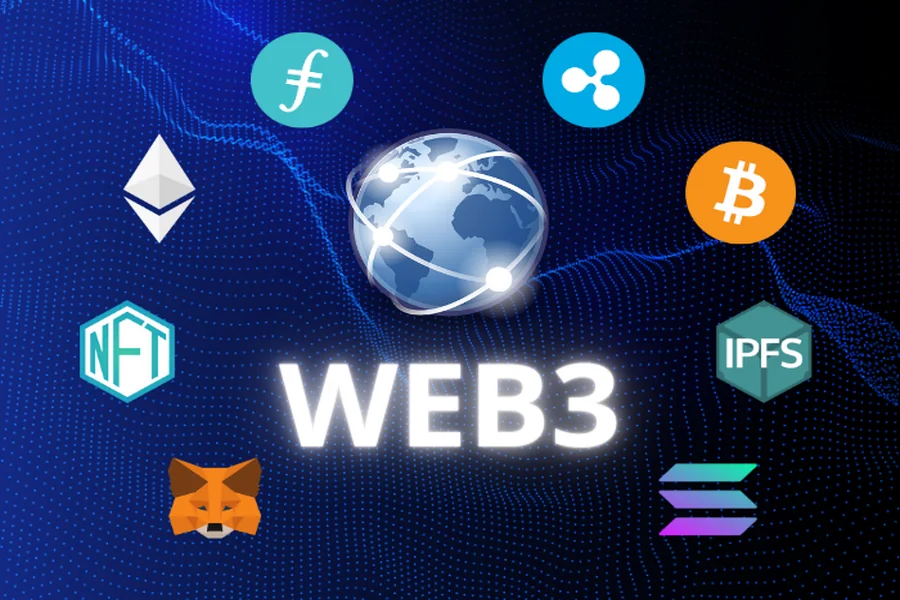
The internet we use today is vastly different from its original iteration, having undergone dramatic transformations over the past few decades. In its infancy, the world wide web was a read-only landscape where early adopters consumed static pages with limited interactivity. This era, commonly referred to as Web 1.0, democratized access to information but offered very little in terms of user contribution. Then came the Web 2.0 revolution, which introduced a highly interactive, social, and user-generated digital environment. However, this convenience came at a significant cost. A handful of massive tech conglomerates became the de facto gatekeepers of the internet, harvesting user data, dictating content algorithms, and monopolizing digital advertising. As awareness of data privacy violations, algorithmic biases, and platform censorship has grown, a collective desire for a more equitable internet has emerged. Enter the era of Decentralized Dreams: The Blockchain and Web3 Evolution. This paradigm shift represents a fundamental restructuring of the digital world, moving away from centralized corporate servers and toward decentralized, peer-to-peer networks powered by cryptographic security. At its core, this evolution is not just a technological upgrade; it is a philosophical movement aimed at redistributing power, wealth, and control back into the hands of everyday users. By leveraging distributed ledger technology, the next iteration of the internet promises a permissionless and trustless environment where individuals interact directly without relying on middlemen. As we delve into the mechanics and implications of this new digital frontier, it becomes clear that the transition to Web3 will fundamentally alter how we perceive digital identity, manage personal finances, and collaborate on a global scale.
The Shift to User Ownership
One of the most profound changes introduced by this technological evolution is the concept of true digital ownership. In the current Web 2.0 ecosystem, you do not truly own your digital assets, your audience, or even your personal data. When you build a following on a social media platform, purchase a digital movie, or upload personal photographs to a cloud server, you are entirely dependent on the goodwill and continued existence of the platform hosting that content. If a platform decides to suspend your account, change its monetization rules, or simply goes out of business, your digital life can vanish in an instant. The decentralized web flips this dynamic entirely. Through the use of blockchain technology, digital assets are tied directly to an individual’s cryptographic wallet rather than a corporate database. This allows for the creation of Non-Fungible Tokens (NFTs), which serve as immutable certificates of authenticity and ownership for digital items. While early public perception of NFTs was largely focused on speculative digital art, the underlying technology has far-reaching implications for creators, musicians, and software developers. A musician can release an album directly to their fans as an exclusive digital asset, retaining complete control over secondary market royalties without relying on predatory record labels or streaming platforms. Furthermore, this shift extends beyond digital art into the realm of digital identity. In a decentralized web environment, users can carry a single, self-sovereign identity across the internet. Instead of creating separate accounts with different passwords for every website—and subsequently handing over an email address and personal details to dozens of different databases—users can simply connect their digital wallet. This wallet acts as a universal passport, allowing individuals to interact with decentralized applications (dApps) while keeping their personal data strictly private. If a user wishes to monetize their own browsing habits or personal data, they can do so on their own terms, receiving tokenized compensation directly rather than allowing a tech giant to profit from their online behavior. Additionally, Decentralized Autonomous Organizations (DAOs) are redefining how communities and businesses are structured. By utilizing smart contracts to enforce rules and execute decisions automatically based on community voting, DAOs enable large groups of strangers to pool capital and work toward a common goal without a traditional corporate hierarchy. This democratization of organizational structure ensures that all stakeholders have a voice in the direction of a project, creating a more equitable distribution of value among the people who actually contribute to the ecosystem.
Financial Freedom and DeFi
While the promise of digital ownership is revolutionizing the creative economy, the impact of blockchain technology on the global financial system is equally staggering. For centuries, the world has relied on centralized financial institutions to act as intermediaries for transferring value. Banks, credit card companies, and remittance services provide necessary infrastructure, but they also exact a heavy toll in the form of high transaction fees, delayed settlement times, and strict regulatory gating. For millions of unbanked individuals in developing nations, these gatekeepers present an insurmountable barrier to economic mobility. Decentralized Finance, commonly known as DeFi, seeks to dismantle these barriers by replacing traditional financial intermediaries with transparent, self-executing smart contracts on a public blockchain. In the DeFi ecosystem, anyone with a smartphone and an internet connection can access a full suite of financial services. Users can lend their digital assets to earn interest, borrow capital by using their holdings as collateral, and trade currencies on decentralized exchanges (DEXs) without ever needing to submit to a credit check or provide invasive personal documentation. Because these protocols operate entirely on code, they run 24 hours a day, 365 days a year, eliminating the concept of “banking hours” and weekend delays. A user in Tokyo can send a massive sum of capital to a user in Buenos Aires, and the transaction will settle in seconds with minimal fees, completely bypassing the archaic Swift network and correspondent banks. The backbone of this financial revolution is the liquidity pool, a mechanism where users lock their assets into a smart contract to facilitate trading for others, earning a portion of the transaction fees in return. This process, often referred to as yield farming or liquidity mining, has created entirely new avenues for passive income generation that were previously reserved for institutional market makers. However, the true beauty of decentralized finance lies in its composability. DeFi protocols are often described as “money legos” because their open-source nature allows developers to build upon existing applications, plugging different protocols together to create highly complex and innovative financial instruments. A developer can seamlessly integrate a decentralized lending protocol with a yield aggregator and a decentralized insurance application, creating a bespoke financial product that would take a traditional bank years of bureaucratic wrangling to launch. This unprecedented rate of innovation is forcing the legacy financial sector to take notice, with many major institutions quietly researching how to integrate distributed ledger technology into their own back-end systems to remain relevant in a rapidly changing world.
Navigating the Challenges Ahead
Despite the immense potential of this new digital paradigm, the road to mass adoption is fraught with significant hurdles that must be overcome. The most pressing technical issue is the blockchain scalability trilemma, a concept which dictates that a decentralized network can only optimize for two of three core properties at any given time: decentralization, security, and scalability. Many legacy blockchains heavily prioritize decentralization and security, which unfortunately results in agonizingly slow transaction speeds and exorbitant network fees during periods of high demand. For a decentralized network to process the volume of daily transactions currently handled by traditional credit card companies, massive scaling solutions are required. Developers are actively building Layer 2 scaling protocols and exploring alternative consensus mechanisms to process transactions off the main chain before bundling them together, significantly reducing costs and increasing throughput. Another major obstacle is the environmental concern associated with early blockchain networks. Traditional Proof of Work (PoW) consensus mechanisms require vast amounts of computational power and electricity to secure the network, leading to widespread criticism regarding their carbon footprint. Fortunately, the industry is rapidly transitioning toward more energy-efficient models, such as Proof of Stake (PoS), which drastically reduces energy consumption while maintaining robust network security. Beyond technical and environmental challenges, the industry faces an incredibly murky regulatory landscape. Governments and financial watchdogs around the globe are struggling to classify digital assets, oscillating between viewing them as commodities, securities, or entirely new asset classes. This lack of regulatory clarity stifles institutional investment and creates a precarious environment for developers who fear heavy-handed enforcement actions. Clear, sensible legislation is desperately needed to protect retail participants from bad actors and fraudulent projects without suffocating the underlying innovation. Lastly, the user experience within the current Web3 landscape remains highly abrasive for the average consumer. Navigating complex seed phrases, managing private keys, calculating gas fees, and avoiding sophisticated phishing scams requires a level of technical literacy that most people do not possess. For decentralized applications to achieve the seamless ubiquity of their Web 2.0 counterparts, developers must prioritize intuitive user interfaces and abstract away the complex cryptographic plumbing so that users can enjoy the benefits of the technology without needing an advanced degree in computer science.
Final Thought
The evolution toward a fully decentralized digital landscape is still in its nascent stages, yet its trajectory is undeniable. We are witnessing the foundational building blocks of a new internet—one that prioritizes user sovereignty, financial inclusivity, and transparent systems over corporate monopolies and opaque intermediaries. While the ecosystem must still navigate significant technical limitations, environmental scrutiny, and regulatory growing pains, the sheer volume of intellectual and financial capital pouring into this space guarantees continued innovation. Ultimately, realizing this vision will require patience, collaboration, and a relentless focus on improving the everyday user experience. As these systems mature and integrate seamlessly into our daily lives, the transformative power of decentralized networks will reshape our global economy and fundamentally redefine how we interact with the digital world.
FAQs
What is the main difference between traditional web structures and Web3? The primary difference is that traditional web structures rely on centralized corporate servers that harvest and monetize user data, whereas Web3 utilizes decentralized networks that allow individuals to retain full ownership and control over their digital assets and personal information.
How does decentralized finance operate without traditional banks? Decentralized finance operates by using self-executing smart contracts on a public blockchain, which automatically enforce the rules of lending, borrowing, and trading without requiring a central authority or human intermediary to approve the transactions.
Why is scalability considered a major challenge for blockchain networks? Scalability is a challenge because prioritizing robust security and network decentralization often limits the number of transactions that can be processed per second, leading to network congestion and high fees during periods of heavy usage.
What purpose does a digital wallet serve in a decentralized ecosystem? A digital wallet serves as both a secure storage vault for your digital assets and a universal, self-sovereign identity passport that allows you to interact seamlessly with various decentralized applications across the internet.


