When it comes to home renovations, many homeowners tend to focus their time, energy, and budgets on sprawling kitchens or expansive master bedrooms, completely overlooking the tiny washroom tucked away at the end of the hall. However, ignoring these compact spaces is a missed opportunity to create something truly spectacular. You do not need a massive footprint to cultivate a sense of luxury and comfort in your home. By shifting your perspective and paying close attention to the smallest details, you can completely alter the atmosphere of the room. If you are ready to tackle that cramped layout, leaning into the concept of Maximizing Minutiae: Small Bathroom Makeovers with Massive Impact is the ultimate secret to turning a frustratingly tight squeeze into a relaxing, highly functional retreat.
The beauty of renovating a more confined area is that a little bit of effort goes a very long way. Because the square footage is limited, you can afford to invest in higher-quality materials for the touches that matter most. Every single tile, fixture, and paint stroke carries more visual weight in a compact zone than it would in a sprawling suite. A tiny washroom forces you to be intentional, stripping away the unnecessary and leaving only what serves a distinct purpose or brings you joy. By focusing on smart design principles rather than relying on raw square footage, you can orchestrate a transformation that feels nothing short of miraculous.
The Magic of Clever Storage Solutions
The most common complaint regarding a compact washroom is the sheer lack of storage space. Bottles, tubes, towels, and grooming tools quickly pile up, creating visual clutter that makes an already tight room feel claustrophobic and chaotic. To combat this, you have to think vertically and look for hidden opportunities. When floor space is at an absolute premium, your walls become your most valuable asset. Installing floating shelves above the toilet or beside the vanity draws the eye upward, giving the illusion of height while providing a stylish home for rolled towels, glass jars of cotton swabs, and small decorative plants.
Recessed storage is another game-changing tactic. If your walls allow for it, carving out space between the studs to install a recessed medicine cabinet or a built-in shower niche reclaims precious inches that would otherwise be wasted. These integrated storage pockets keep your daily essentials easily accessible without protruding into your usable area. Inside the vanity, organization is equally critical. You can attach magnetic strips to the interior of your cabinet doors to hold tweezers, nail clippers, and bobby pins. Utilizing tiered organizers and acrylic bins beneath the sink ensures that no cubic inch of storage is left behind. By assigning a specific home to every single item, you eliminate clutter and instantly make the room feel larger and more serene.
Strategic Lighting and Mirrors
Lighting can make or break any interior design project, but in a small washroom, it is the fundamental difference between a dingy cave and a vibrant sanctuary. Relying solely on a single overhead light fixture often casts harsh, unflattering shadows that visually shrink the room. Instead, you want to implement a layered lighting approach. Combine ambient overhead lighting with task lighting near the vanity. Installing sleek sconces on either side of the mirror at eye level provides even, flattering illumination for morning routines while eliminating heavy shadows. Opt for LED bulbs with a color temperature between 3000K and 4000K to mimic natural daylight, keeping the space bright and energized.
Mirrors are the oldest trick in the interior design playbook, and for good reason. A well-placed, oversized mirror acts as a virtual window, bouncing light around the room and tricking the brain into perceiving double the depth. Instead of a standard, builder-grade mirror, consider installing a large, frameless piece that spans the entire width of the vanity or even reaches the ceiling. Backlit LED mirrors are another brilliant choice, as they provide an ultra-modern aesthetic and excellent task lighting without requiring additional wall space for sconces. Furthermore, replacing a heavy, opaque shower curtain with a clear, frameless glass shower enclosure removes visual barriers, allowing light to flow uninterrupted from corner to corner.
Color Palettes and Material Choices
The colors and materials you select play a massive role in dictating the perceived volume of your layout. As a general rule, light, airy color palettes are your best friend when trying to visually expand a tight perimeter. Crisp whites, soft dove grays, pale blues, and warm creams reflect both natural and artificial light beautifully. Painting the walls and ceiling the same light color blurs the sharp lines where the wall meets the ceiling, creating an optical illusion of endless vertical space. However, keeping the walls light does not mean the space has to be boring. You can ground the room by utilizing a bold, patterned floor tile or introducing contrast through dark, elegant hardware.
When it comes to selecting tile, size matters immensely. It is a common misconception that small rooms require small tiles. In reality, tiny tiles mean a multitude of grout lines, which creates a grid-like visual clutter that busies the eye and shrinks the room. Opting for large-format tiles on the floor and walls reduces the number of grout lines, resulting in a smooth, seamless, and expansive look. Taking your shower tile all the way up to the ceiling rather than stopping at the standard height is another subtle minutia that visually raises the roofline. Glossy tile finishes are also highly recommended for confined spaces, as their reflective surfaces act like micro-mirrors, further enhancing the ambient light.
Upgrading Fixtures for a Modern Look
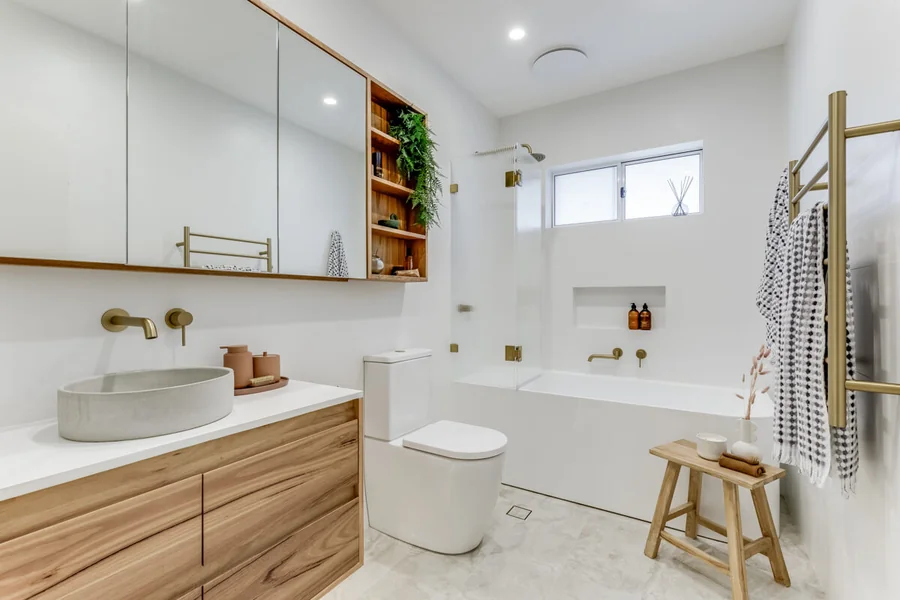
Sometimes, a massive impact does not require tearing down walls or completely rerouting your plumbing. A strategic facelift focused entirely on upgrading your fixtures can completely modernize a tired space over a single weekend. Swapping out a bulky, floor-mounted vanity cabinet for a sleek, wall-mounted floating vanity is a phenomenal way to create the illusion of more space. Because you can see the flooring extend all the way to the wall underneath the vanity, your brain registers the room as being wider than it actually is.
Similarly, replacing standard toilets with compact, elongated, or wall-mounted models can save crucial inches and improve the overall flow of traffic. Your hardware finishes—such as your faucet, showerhead, drawer pulls, and towel bars—serve as the jewelry of the room. Trading out dated, tarnished fixtures for cohesive, modern finishes like matte black, brushed brass, or polished nickel instantly elevates the aesthetic. Wall-mounted faucets are an incredibly chic detail that also frees up valuable counter space on a narrow vanity. By obsessing over these smaller details, you ensure that the entire room feels intentional, luxurious, and expertly curated, proving that high-end design is not reserved exclusively for sprawling mansions.
FAQs
What is the best color to paint a small bathroom to make it look bigger? The best colors for making a tight space appear larger are light, reflective shades such as crisp white, soft gray, pale blue, or warm cream, as they bounce light effectively and create an airy atmosphere.
How can I make my tiny washroom feel larger without doing a full remodel? You can dramatically increase the perceived size of the room by upgrading your lighting fixtures, installing an oversized frameless mirror, decluttering your countertops, and swapping an opaque shower curtain for a clear glass door.
Are large tiles or small tiles better for a compact floor plan? Large-format tiles are generally much better for compact spaces because they require fewer visible grout lines, which minimizes visual clutter and creates a smooth, expansive appearance across the floor and walls.
Does installing a floating vanity actually save space in a tight layout? Yes, a floating vanity frees up the floor area directly beneath it, which tricks the eye into perceiving a wider room while still providing essential hidden storage for your daily toiletries.
Is it a good idea to mix metal finishes in a compact space? While mixing metals can look incredibly chic in larger rooms, it is usually better to stick to a single, cohesive finish for all your hardware in a tiny layout to maintain a clean, unified, and uncluttered aesthetic.
Final Thought
Tackling a tiny washroom renovation does not have to be an overwhelming or frustrating endeavor. By shifting your focus toward the finer details and acknowledging that every single inch holds incredible potential, you can create a space that is as beautiful as it is functional. Remember that constraints often breed the most brilliant creative solutions. Whether you are installing a sleek floating vanity, upgrading your lighting scheme to bounce illumination off an oversized mirror, or simply decluttering and organizing your daily essentials, these small, calculated changes compound to yield truly astonishing results. Embrace the challenge of your compact footprint, utilize smart design principles to outsmart your square footage, and enjoy the rewarding process of turning a cramped, overlooked room into a stunning, luxurious sanctuary that you will love stepping into every single day.


