Welcome to a journey through the history of competitive gaming. When examining the history of the Esports Empire: From Basement Arcades to Billion-Dollar Arenas, it is hard to believe that this massive global industry started with a few friends gathering around heavy cathode-ray tube televisions and sticky arcade cabinets. Today, electronic sports have transcended their humble origins to become a mainstream cultural force. Millions of fans tune in to watch professional gamers battle it out in virtual worlds, while major corporations invest heavily in teams, sponsorships, and broadcasting rights. This article traces the fascinating evolution of digital competitions, examining how a niche hobby transformed into an economic juggernaut. We will delve into the technological advancements that paved the way for online multiplayer, the cultural shifts that legitimized professional gaming, and the infrastructure that supports today’s massive tournaments. Whether you are a lifelong fan who remembers dialing up to play early shooters or a newcomer curious about the massive stadiums filling up with cheering crowds, the story of this industry’s growth is a testament to human ingenuity and our timeless love for competition.
The transition from local LAN parties to international spectacles did not happen overnight. It required decades of passionate community building, visionary developers, and players willing to dedicate their lives to mastering complex digital games. As we unpack this incredible journey, you will see how every era contributed a vital piece to the puzzle, ultimately constructing the massive ecosystem we recognize today. From casual wagers in neon-lit game centers to the highly structured corporate leagues of the modern era, the dedication of the community has remained the beating heart of the industry.
The Humble Beginnings of Competitive Gaming
The roots of competitive gaming can be traced back to the early 1970s, long before the internet connected players across continents. In 1972, Stanford University hosted what is widely considered the first official video game tournament, centering around the game Spacewar. The grand prize was a year’s subscription to Rolling Stone magazine, a far cry from the multimillion-dollar prize pools of today, yet it established a crucial precedent: people loved competing in virtual environments and others loved watching them. Throughout the late 1970s and 1980s, the arcade culture took hold. Classic games like Space Invaders, Pac-Man, and Donkey Kong fueled a massive wave of high-score chasing. Players would spend hours, and countless quarters, attempting to immortalize their initials at the top of the leaderboard. This era was defined by local communities. Arcades were social hubs where players gathered to share tips, challenge local champions, and build a localized competitive scene. Twin Galaxies, an organization founded by Walter Day in 1981, began tracking high scores and organizing events, adding a layer of official record-keeping to the chaotic arcade scene.
As home consoles like the Nintendo Entertainment System (NES) and Sega Genesis became widespread, the locus of gaming shifted from the arcade to the living room. Nintendo famously capitalized on this with the 1990 Nintendo World Championships, a massive touring event across the United States that culminated in a spectacular finale. Players competed in a custom cartridge featuring Super Mario Bros., Rad Racer, and Tetris. This event demonstrated that organized, large-scale video game competitions could draw immense crowds and generate significant media interest. However, these early competitions were still largely isolated events. The concept of a sustained, professional career in gaming remained a distant dream, limited by the lack of connectivity and financial infrastructure. Players competed for glory, bragging rights, and occasionally physical prizes, laying the vital grassroots foundation for the massive industry that would eventually follow.
The Internet Revolution and Global Connectivity
The landscape of competitive gaming was forever altered in the 1990s with the widespread adoption of personal computers and the advent of the internet. This technological leap dismantled geographic barriers, allowing players to compete against opponents across the globe without leaving their homes. Titles like Doom and Quake pioneered the first-person shooter (FPS) genre and introduced robust multiplayer capabilities. The release of Quake in 1996 was particularly revolutionary, as its client-server model optimized online play over dial-up connections, giving rise to online leagues and clans. In 1997, the Red Annihilation tournament for Quake offered a Ferrari 328 GTS as its grand prize, famously won by Dennis “Thresh” Fong. This event is often cited as the world’s first truly national electronic sports event, signaling a shift toward more valuable rewards and higher stakes. Concurrently, the late 1990s saw the release of StarCraft, a real-time strategy game that would ignite a cultural phenomenon, particularly in South Korea. The game’s intricate balance and high skill ceiling made it a perfect spectator sport.
In South Korea, the Asian financial crisis of 1997 led to massive investments in broadband infrastructure. This widespread, affordable internet access birthed the “PC Bang” culture—local LAN gaming centers where young people congregated to play multiplayer games for a small hourly fee. StarCraft flourished in this environment, eventually leading to the creation of dedicated television channels that broadcast matches around the clock. Professional players emerged as national celebrities, complete with fan clubs, lucrative contracts, and massive stadium events. This South Korean model provided a glimpse into the future of global gaming, proving that electronic sports could sustain a massive broadcasting ecosystem and dedicated professional athletes. Meanwhile, in the West, organizations like the Cyberathlete Professional League (CPL) and the Electronic Sports World Convention (ESWC) began hosting regular international tournaments, establishing the structural framework for modern competitive circuits. The internet not only connected players but also allowed fans to download match replays, study strategies, and build global communities centered around their favorite titles.
The Rise of Professional Leagues and Sponsors
While the 2000s established the viability of organized tournaments, the 2010s witnessed the explosive growth of professional leagues and the game-changing impact of live streaming platforms. The launch of Twitch in 2011 fundamentally transformed how audiences consumed competitive gaming. Before Twitch, fans relied on fragmented broadcasting solutions, delayed video on demand, or in-game spectator clients. Twitch centralized the viewing experience, providing a reliable, high-quality platform where millions of viewers could watch live matches, interact through chat, and support their favorite players directly. This democratization of broadcasting allowed independent tournament organizers and charismatic players to build massive audiences without relying on traditional television networks. As viewership skyrocketed, major game developers recognized the immense marketing and financial potential of owning their competitive ecosystems. Riot Games, the developer of League of Legends, pioneered the franchise model with the establishment of the League of Legends Championship Series (LCS). This system mirrored traditional sports leagues, featuring salaried players, regular season matches, and high-production broadcasts.
Following Riot’s success, other publishers like Activision Blizzard launched the Overwatch League and the Call of Duty League, utilizing city-based franchise models backed by traditional sports owners and billionaires. This era attracted an influx of non-endemic sponsors—brands like Coca-Cola, Mercedes-Benz, and Intel—who sought to reach the elusive, highly engaged demographic of young gamers. Prize pools reached staggering heights, most notably with Valve’s The International for Dota 2, which utilized crowd-funding to push its prize pool past the forty million dollar mark. Professional players transitioned from passionate hobbyists to full-time athletes, supported by nutritionists, sports psychologists, and specialized coaching staff. Teams moved into dedicated training facilities, complete with state-of-the-art equipment and living quarters. The establishment of these professional leagues created a stable career path for talented individuals, legitimizing the industry in the eyes of mainstream media and investors. The synergy between massive live events and accessible daily streams created a relentless content engine, fueling the industry’s exponential growth and paving the way for unprecedented commercial opportunities.
Building the Modern Stadium Experience
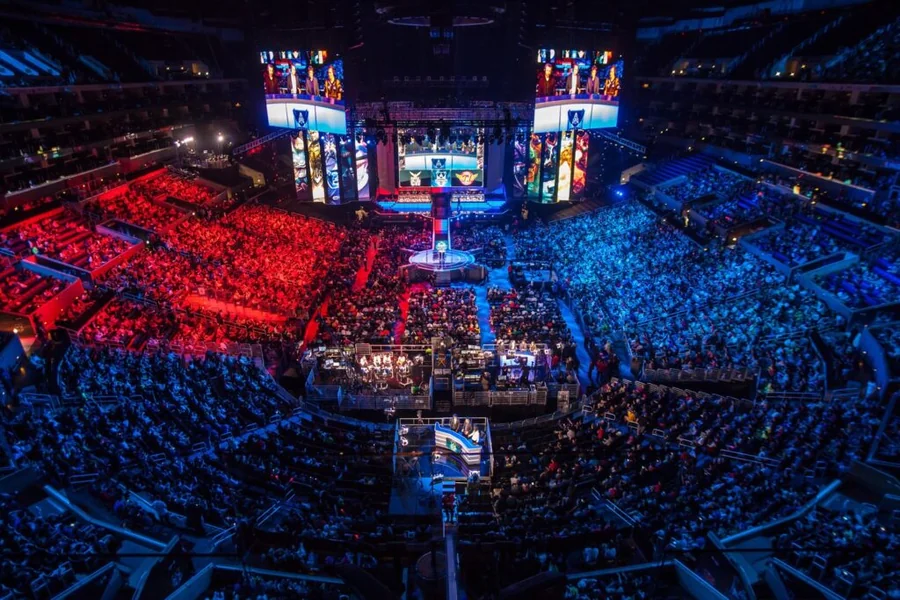
Today, the culmination of competitive gaming is experienced in massive, sold-out arenas that rival any traditional sporting event. The transition from cramped hotel ballrooms and convention center basements to iconic venues like the Staples Center in Los Angeles or the Bird’s Nest in Beijing illustrates the massive cultural shift that has taken place. These modern stadium experiences are meticulously designed spectacles that blend high-level competition with cutting-edge entertainment technology. Attendees are treated to elaborate opening ceremonies featuring live musical performances, augmented reality displays that bring in-game characters to life on stage, and dazzling pyrotechnics. Huge screens, sometimes measuring dozens of feet across, are suspended above the players so the audience can catch every micro-decision, every twitch reflex, and every crucial team fight in real-time. The atmosphere inside these arenas is electric, filled with the roar of tens of thousands of fans, coordinated chants, and a sea of glowing merchandise.
Furthermore, the infrastructure supporting these massive events has evolved to ensure absolute competitive integrity and seamless broadcasting. Specially designed soundproof booths or noise-canceling headsets are utilized to isolate players from the deafening crowd noise, allowing them to communicate effectively with their teammates. Backstage, a small army of technicians, producers, and broadcast talent works tirelessly to deliver the action to millions of viewers watching at home in dozens of different languages. Cities around the world now actively bid to host major championships, recognizing the significant economic boost brought by thousands of traveling fans who fill hotels, restaurants, and local attractions. Developers and tournament organizers are even beginning to construct dedicated, permanent venues designed specifically for digital sports, featuring optimized acoustics, specialized seating arrangements, and integrated broadcasting studios. This commitment to the live experience ensures that the energy and passion of the community are captured and amplified, proving that the thrill of digital competition is best shared in the company of fellow fans.
FAQs
What exactly are electronic sports? Electronic sports refer to organized, competitive video gaming where professional players and teams compete against each other in various titles for prize money and prestige.
How do professional gamers make money? Professional gamers earn income through a variety of streams including team salaries, tournament prize winnings, lucrative sponsorship deals, and revenue from live streaming their gameplay on platforms like Twitch or YouTube.
Are these competitions considered real sports? While there is ongoing debate regarding the physical exertion involved, competitive gaming requires immense mental stamina, rapid reflexes, intense strategic planning, and teamwork, leading many traditional sports organizations and governments to officially recognize them as legitimate sports.
What games are played at these massive events? A wide variety of genres are represented, but the most popular and lucrative games typically include multiplayer online battle arenas (MOBAs) like League of Legends and Dota 2, first-person shooters (FPS) like Counter-Strike and Valorant, and battle royale titles like Fortnite.
Can anyone become a professional player? Anyone with access to the game has the theoretical potential, but reaching the professional level requires thousands of hours of dedicated practice, exceptional natural talent, and the ability to perform consistently under extreme pressure.
How large is the global audience for these tournaments? The global audience has grown exponentially, with hundreds of millions of regular viewers worldwide tuning in to major championship events, often surpassing the viewership of traditional sporting events like the Super Bowl or the World Series.
Final Thought
Reflecting on the incredible trajectory of this industry, it is clear that competitive gaming has secured its place as a cornerstone of modern entertainment. The journey from dark arcades and cramped living rooms to the blinding lights of international stadiums is a remarkable story of technological advancement and community passion. While the industry faces ongoing challenges such as player burnout, organizational sustainability, and evolving game lifespans, the foundation built over the last few decades is undeniably solid. The continuous influx of new talent, coupled with constant innovations in game design and broadcasting technology, ensures that the competitive landscape will continue to evolve and thrill audiences.
As virtual reality and other emerging technologies begin to mature, the next frontier of digital competition may look vastly different from what we know today. However, the core elements that have driven this phenomenal growth—the desire to compete, the joy of mastery, and the thrill of witnessing human excellence—will always remain the same. The global phenomenon we see today is just the beginning of a much larger, enduring legacy that will captivate generations of players and spectators to come.


