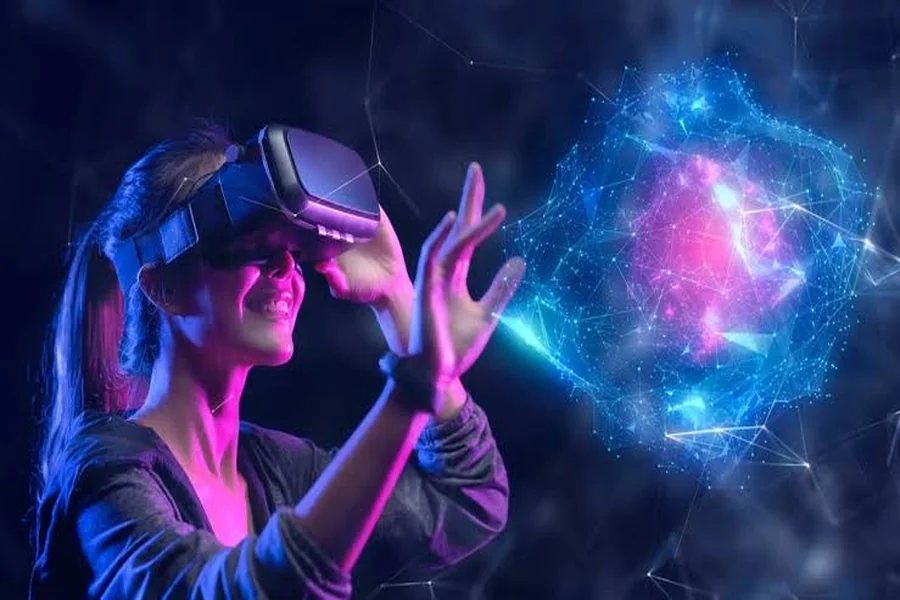
When we look back at the history of interactive entertainment, the journey from simple glowing squares on an oscilloscope to fully rendered three-dimensional worlds is nothing short of miraculous. Yet, for decades, one fundamental barrier remained constant: the screen. Players were always separated from their digital adventures by a pane of glass. Today, that boundary is dissolving. As we analyze the current state of the industry, Pixels and Play: How Virtual Reality is Rewriting the Gaming Code becomes a central theme for developers and enthusiasts alike. This shift is not merely a graphical upgrade; it is a complete reimagining of how humans interact with digital environments. By placing the player physically inside the simulation, virtual reality demands entirely new design philosophies, control schemes, and narrative techniques. The days of passively mashing buttons on a couch are giving way to an era of active, physical, and profoundly immersive participation. As headset technology becomes more accessible and wireless, we are witnessing a paradigm shift that will dictate the future of digital entertainment for generations to come.
The Evolution of Immersive Technology
For a long time, the promise of true virtual immersion was relegated to science fiction and clunky, nausea-inducing arcade machines of the 1990s. Early attempts at bringing this technology into the living room failed largely due to extreme hardware limitations. The processors of the past simply could not render dual images fast enough to trick the human brain, resulting in experiences that were jarring and uncomfortable. However, the relentless march of technological progress eventually caught up with our ambitions. High-resolution micro-displays, sophisticated gyroscopic sensors, and incredibly powerful mobile processors have converged to create standalone headsets that deliver jaw-dropping fidelity without the need for cumbersome cables. This evolution has fundamentally altered the expectations of the modern player. We have moved from a period where graphic fidelity was measured purely in polygon counts and texture resolutions to a space where “presence” is the ultimate metric. Presence is the psychological phenomenon where the user’s brain subconsciously accepts the virtual environment as reality. Achieving this requires incredibly low latency, a high refresh rate, and perfect one-to-one tracking of the user’s head and hands. When these elements align perfectly, the screen melts away. The player ceases to be an observer manipulating an avatar on a television and instead becomes the avatar. This profound psychological shift is the foundation upon which all modern immersive titles are built, setting a new baseline for what constitutes a truly engaging digital experience.
Shattering the Two-Dimensional Screen Barrier
Traditional game design has always relied on a language of abstraction. Pressing a plastic button with your thumb might cause a character on screen to swing a sword, jump over a gap, or fire a weapon. Players had to learn and internalize this abstract mapping to interact with the world. Virtual reality throws this entire rulebook out the window. In a spatial environment, if you want to pick up an object, you reach out your physical hand, grab it, and lift it. If you want to take cover from incoming fire, you must physically bend your knees and duck behind a virtual wall. This removal of abstract button presses shatters the two-dimensional screen barrier and taps directly into our innate human motor skills. This physical approach to interactivity creates moments of intense emotional resonance that are nearly impossible to replicate on a standard television. The sheer sense of scale in a virtual environment can induce genuine vertigo when peering over a digital cliff, or a palpable sense of awe when looking up at a towering architectural marvel. Horror titles leverage this physical vulnerability to invoke deep, primal fear, as the player can no longer simply look away from a flat rectangle on the wall. The monsters are in the room with them, invading their personal space. Furthermore, this physical engagement has introduced unexpected health and fitness benefits, as players inadvertently burn calories while swinging virtual sabers, dodging obstacles, or boxing against digital opponents. The entire body has become the controller, and this simple fact is forcing the industry to rethink every aspect of interactive design.
Building New Mechanics for a New Medium
Because the medium is so radically different, developers have had to invent entirely new mechanics to accommodate the player’s physical presence. One of the most significant challenges has been artificial locomotion. In a traditional first-person shooter, moving a joystick slides the camera forward smoothly. In a headset, this same movement without corresponding physical momentum can cause severe motion sickness, as the eyes tell the brain the body is moving, but the inner ear insists the body is stationary. To combat this, creators have pioneered a variety of innovative movement systems. Teleportation mechanics allow users to point and instantly blink to a new location, bypassing the nausea-inducing transition. Others have developed physical arm-swinging mechanics, where the player must pump their arms to walk forward, providing enough physical feedback to trick the vestibular system into accepting the visual movement. User interface design has also undergone a massive transformation. Floating health bars and mini-maps clutter the field of view and ruin the illusion of presence. Instead, designers now rely on diegetic interfaces—elements that exist organically within the game world. A player might check their remaining ammunition by physically looking at a digital counter mounted on their weapon, or review their health status by glancing at a high-tech watch on their virtual wrist. Backpacks must be physically unzipped to retrieve items, and weapons must be manually reloaded by ejecting a magazine and slamming a new one into the receiver. These tactile, process-driven mechanics require a steep learning curve for developers, but the payoff is an unprecedented level of player immersion. Every action requires deliberate, physical intent, making even the simplest tasks feel rewarding and engaging.
Overcoming Hardware and Design Hurdles
Despite the incredible strides made in recent years, the industry still faces substantial hurdles that must be overcome before spatial gaming achieves true mainstream ubiquity. The most prominent barrier remains physical comfort. While modern headsets are significantly lighter than their predecessors, strapping a computer and a battery to your face for extended periods can still cause fatigue. The heat generated by the displays and processors, combined with the physical exertion of the gameplay, often limits play sessions to much shorter durations than traditional console gaming. Ergonomics and weight distribution are constantly being refined, but achieving the form factor of a standard pair of glasses remains the ultimate, elusive goal. Accessibility is another critical challenge that developers are actively working to address. Experiences that require full 360-degree turning, crouching, and wild arm flailing inherently exclude players with physical disabilities or limited mobility. Forward-thinking studios are beginning to implement robust comfort and accessibility options, allowing users to play seated, adjust height virtually, or perform complex actions with simplified button presses if they are unable to perform the physical motions. Furthermore, the financial barrier to entry, while decreasing, still prevents widespread adoption. High-end headsets require expensive gaming computers, though the rise of standalone units has democratized the technology significantly. As manufacturing costs decrease and the hardware becomes more efficient, we can expect to see these barriers erode, paving the way for a more inclusive and widespread immersive ecosystem.
Final Thought
The transition from flat screens to spatial environments represents the most significant leap in interactive entertainment since the jump from 2D sprites to 3D polygons. We are no longer merely playing games; we are inhabiting them. While the technology will continue to shrink in size and grow in power, the true revolution lies in the fundamental rewriting of the design rulebook. By transforming players from passive spectators into active physical participants, the industry is unlocking levels of emotional engagement and immersion that were previously unimaginable, ensuring a thrilling and dynamic future for digital entertainment.
FAQs
What do I need to start playing in virtual reality? To begin, you will need a dedicated headset, which can either be a standalone unit with built-in processors or a PC-tethered system that requires a powerful graphics card.
Can virtual reality games cause motion sickness? Yes, some users experience nausea due to a disconnect between what their eyes see and what their inner ear feels during artificial movement.
Are there games available for people who prefer to sit down? Many modern titles offer dedicated seated modes and robust accessibility settings to ensure comfort for a wide variety of physical needs.
Will traditional screen-based games disappear completely? Traditional flat-screen games will not disappear entirely because they offer a relaxed, passive form of entertainment that requires significantly less physical and mental exertion.
Do I need a large empty room to use a headset? While “room-scale” games require a cleared area to move around, many systems support stationary boundary modes where you can safely play while standing in one spot or sitting in a chair.


